


L’huile de bois d’agar raffinée est depuis longtemps réputée pour sa profondeur, pureté, et complexité thérapeutique. Pendant des siècles, cet extrait aromatique a façonné les rituels de bien-être à travers les cultures. Cependant, alors que les consommateurs modernes recherchent des huiles botaniques respectueuses de la peau, une nouvelle question émerge: L'huile de bois d'agar raffinée peut-elle soutenir la peau sensible sans irritation? Parce que la sensibilité varie considérablement selon les individus, la réponse exige un examen attentif. Donc, cette discussion explore les propriétés scientifiques, méthodes d'extraction, comportement moléculaire, et considérations pratiques qui influencent la réponse cutanée. Bien que la tradition offre des histoires puissantes, la sécurité des peaux sensibles doit reposer sur des preuves et une logique de formulation plutôt que sur des mythes.
Le marché actuel des soins de la peau met en avant la pureté et la douceur comme priorités clés. Par conséquent, huile de bois d'agar raffiné attire l'attention des utilisateurs qui recherchent des alternatives naturelles aux huiles parfumées synthétiques. Parce que Crescent Oud se spécialise dans l'huile de bois d'agar de haute qualité, la marque joue un rôle central dans la clarification des idées fausses qui entourent les soins de la peau à base de oud. Bien que beaucoup pensent que toutes les huiles essentielles irritent les peaux sensibles, cette hypothèse ignore le rôle du raffinement, poids moléculaire, qualité d'extraction, et stabilité à l'oxydation.
Pour comprendre si l’huile de bois d’agar raffinée convient aux peaux sensibles, il faut explorer comment sa structure chimique interagit avec les barrières cutanées. De plus, son niveau de raffinement influence considérablement cette interaction. Donc, cet article examine en détail l'huile de bois d'agar raffinée tout en répondant aux préoccupations, offrant de la clarté, et présenter des informations fondées sur des preuves.
1. L’origine des problèmes de sensibilité
De nombreux utilisateurs à la peau sensible réagissent mal aux huiles essentielles car certaines huiles contiennent des allergènes., composés oxydés, ou des structures terpéniques dures. Par conséquent, les huiles essentielles développent une réputation d’irritation potentielle. Cependant, cette généralisation simplifie à l'excès une catégorie complexe. Bien que certaines huiles essentielles présentent une forte réactivité, d'autres se comportent beaucoup plus doucement en raison d'une plus faible agressivité des terpènes, meilleure stabilité oxydative, ou niveaux de raffinement supérieurs.
L'huile de bois d'agar raffinée diffère considérablement des huiles d'agrumes agressives ou des distillats de résine brute. Parce que le processus de raffinement élimine les irritants volatils, l'extrait final contient un profil moléculaire plus lisse. Donc, la réponse cutanée dépend en grande partie de la qualité de l'huile plutôt que de la source botanique brute. Toujours, les mythes persistent parce que la plupart des consommateurs ne rencontrent jamais d’huile de bois d’agar raffinée de haute qualité. Plutôt, ils rencontrent des substituts de oud de mauvaise qualité contenant des impuretés qui irritent la peau sensible.
Pour évaluer équitablement l’huile de bois d’agar raffinée, il faut séparer l’extraction véritable des produits frelatés du marché. Crescent Oud souligne cette distinction car la pureté détermine la sécurité plus que l'espèce botanique elle-même.
2. Comment le raffinement modifie le comportement du pétrole
Le raffinement joue un rôle crucial dans la transformation de l'huile de bois d'agar d'un extrait de résine dense en un extrait doux, matériau doux pour la peau. Pendant le raffinement, les producteurs éliminent les composants lourds en goudron, molécules instables, et résidus réactifs. Ces substances irritent souvent le pétrole brut. Donc, les retirer modifie considérablement le comportement de l’huile.
L'huile de bois d'agar raffinée contient des sesquiterpènes stables et des composés aromatiques doux qui interagissent doucement avec les couches lipidiques de la peau.. Ces molécules portent des structures plus grandes et une volatilité réduite, ils s'évaporent donc lentement et restent doux pour la surface de l'épiderme. Parce que les peaux sensibles sont souvent confrontées à une faiblesse de leur barrière, les huiles à faible volatilité réduisent les contraintes sur la surface.
De plus, l'huile de bois d'agar raffinée présente une forte stabilité oxydative. Parce que l'oxydation déclenche souvent des irritations, la stabilité joue un rôle protecteur. De nombreuses huiles essentielles s'oxydent rapidement et forment des sous-produits réactifs qui irritent les peaux sensibles. Cependant, l'huile de bois d'agar conserve son intégrité au fil du temps car le raffinement élimine les fractions instables.
Cette différence explique pourquoi de nombreux utilisateurs ressentent une irritation avec l'huile de oud brute tout en tolérant bien l'huile de bois d'agar raffinée..
3. La chimie derrière la compatibilité cutanée
La peau sensible réagit fortement à la structure moléculaire. Molécules aux arêtes vives, forte volatilité, ou les liaisons réactives irritent souvent la barrière. Donc, la douceur et la stabilité moléculaires déterminent le confort. L'huile de bois d'agar raffinée contient des sesquiterpènes avec des formes chimiques plus rondes et des taux d'évaporation plus faibles.. Ces propriétés favorisent une interaction calme avec la couche cornée.
En outre, l'huile de bois d'agar contient des composants anti-inflammatoires naturels. Bien que ces composants diffèrent selon l'origine de l'arbre et la méthode de distillation, ils contiennent souvent de l'agarospirol, ginkohol, et dérivés du guaïène. Ces molécules aident à réduire les rougeurs et à calmer les irritations. Parce que les peaux sensibles subissent facilement des inflammations, ces effets deviennent précieux.
Cependant, la concentration compte. Même les huiles douces nécessitent une dilution appropriée. Crescent Oud recommande une formulation soignée pour garantir que l'huile de bois d'agar respecte la tolérance cutanée.
Parce que la compatibilité moléculaire reste élevée et les irritants restent faibles, L'huile de bois d'agar raffinée offre un confort potentiel aux peaux sensibles lorsqu'elle est utilisée correctement.
4. Le rôle de la pureté dans la tolérance cutanée
Les niveaux de pureté déterminent la façon dont la peau interagit avec les huiles essentielles. De nombreux cas d'irritation résultent d'une falsification, pas de l'huile elle-même. Les huiles commerciales de qualité inférieure contiennent souvent des parfums synthétiques, additifs de support, solvants, ou boosters chimiques. La peau sensible réagit mal à ces contaminants.
Crescent Oud se concentre sur l'huile de bois d'agar raffinée produite par distillation à la vapeur et purification post-distillation. Ces étapes suppriment les composants qui compromettent la pureté. Parce que le produit final ne contient que des composés aromatiques raffinés, la peau rencontre moins d'irritants.
La pureté soutient également la prévisibilité. Les peaux sensibles ont besoin de formulations stables. Quand les huiles contiennent des impuretés, les utilisateurs sont confrontés à des réactions incohérentes. L'huile de bois d'agar raffinée conserve sa consistance car le processus de raffinement garantit une composition moléculaire uniforme..
Donc, la pureté agit comme un facteur central de sécurité. Sans pureté, même l'huile la plus douce peut irriter la peau.

5. Pourquoi la peau sensible réagit différemment
Les peaux sensibles développent facilement une inflammation car la barrière manque souvent d'une forte densité lipidique. Donc, les irritants pénètrent plus rapidement. En raison de cette structure, même les huiles douces peuvent créer un inconfort si elles pénètrent trop rapidement dans les couches plus profondes.
L'huile de bois d'agar raffinée se comporte différemment. Ses plus grosses molécules sesquiterpéniques restent à la surface et s'intègrent à la matrice lipidique. Parce qu'ils s'évaporent lentement, ils apportent des bienfaits aromatiques sans pénétration agressive. Donc, ils favorisent le confort de la peau qui lutte contre les huiles essentielles fortes.
Cependant, la sensibilité varie considérablement. Certaines personnes réagissent à n'importe quel composé aromatique. Donc, les tests de patch restent importants. Crescent Oud encourage les utilisateurs à prendre en compte leurs antécédents dermatologiques personnels avant une application active.
Toujours, par rapport à de nombreuses huiles essentielles, l'huile de bois d'agar raffinée offre un profil plus doux en raison de ses molécules aromatiques à longue chaîne et de sa composition stable.
6. Utilisation traditionnelle et vision moderne
Le bois d'agar est au service des traditions de bien-être depuis des siècles. Bien que les utilisations anciennes impliquaient rarement une application directe sur la peau, ils mettent en valeur sa nature apaisante. Aujourd'hui, l'évaluation scientifique apporte de la clarté. Les chercheurs observent que huile de bois d'agar raffiné montre souvent un potentiel anti-inflammatoire. Ces propriétés favorisent le calme de la peau lorsqu'elles sont utilisées dans des plages de concentration sûres..
Parce que les techniques d’extraction modernes raffinent davantage le pétrole, le produit final offre une meilleure compatibilité cutanée que les distillats de résine historiques. Crescent Oud se concentre sur un raffinement de haute qualité pour garantir cette compatibilité moderne.
Toujours, la tradition ajoute un contexte utile. De nombreuses huiles aromatiques ont une signification spirituelle, Pourtant, l'huile de bois d'agar raffinée se distingue car les utilisateurs décrivent le confort plutôt que l'irritation.. Cette réputation correspond à son comportement moléculaire.
7. Facteurs d'application qui influencent la réponse cutanée
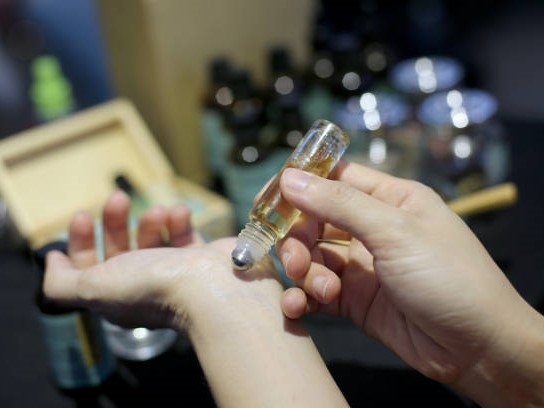
Même les huiles douces nécessitent une utilisation réfléchie, surtout pour les peaux sensibles. Concentration, dilution, et la fréquence influencent le confort. L'huile de bois d'agar raffinée fonctionne mieux lorsqu'elle est mélangée à des huiles de support ayant des profils d'acides gras stables.. Parce que les peaux sensibles réagissent bien aux huiles qui soutiennent la barrière, des transporteurs comme le squalane, jojoba, et l'écume des prés se marient efficacement avec l'huile de bois d'agar raffinée.
En outre, l'environnement compte. Les climats secs augmentent la sensibilité car les couches barrières cutanées perdent rapidement leur hydratation.. L'humidité favorise une meilleure tolérance. Donc, les utilisateurs doivent tenir compte de l'exposition environnementale lors de l'évaluation de leur réponse cutanée.
Crescent Oud recommande d'éviter l'application après une exfoliation ou des traitements acides actifs. Ces traitements affaiblissent les couches barrières. Même les huiles douces peuvent sembler plus fortes sur une peau fragilisée..
Lorsqu'il est utilisé de manière réfléchie, l'huile de bois d'agar raffinée peut compléter les routines des peaux sensibles sans causer de stress.
8. Distinguer le mythe de la réalité
De nombreux mythes entourent les huiles essentielles. Certains prétendent que toutes les huiles essentielles irritent les peaux sensibles. D'autres prétendent que l'huile de bois d'agar raffinée fait des miracles pour tous les teints.. Les deux extrêmes simplifient à l’extrême la vérité.
La réalité se situe entre mythe et miracle. L'huile de bois d'agar raffinée offre un profil doux et un potentiel apaisant notable. Cependant, cela nécessite une dilution correcte et une utilisation réfléchie. Les peaux sensibles bénéficient de la stabilité, et l'huile de bois d'agar offre cette stabilité lorsqu'elle est formulée correctement.
Crescent Oud promeut une compréhension fondée sur la science plutôt qu'une exagération marketing. Parce que l’huile de bois d’agar contient une chimie complexe, son comportement doit être expliqué plutôt que mystifié.
Les utilisateurs doivent s'attendre à du confort, profondeur aromatique, et de subtils effets apaisants. Ils ne doivent pas s’attendre à une transformation instantanée ou à une compatibilité universelle. Une utilisation responsable favorise la sécurité et améliore l'expérience.
Conclusion: Mythe ou miracle? La réponse équilibrée
Huile de bois d'agar raffinée occupe une place unique dans les soins des peaux sensibles. Il évite la forte volatilité de nombreuses huiles essentielles et fournit des molécules aromatiques stables qui interagissent en douceur avec la barrière cutanée.. Parce que le raffinement élimine les irritants, l'huile offre du confort lorsqu'elle est formulée avec soin. Cependant, ce n'est pas un miracle universel. La peau sensible exige du respect, et même les huiles douces nécessitent une application réfléchie.
Toujours, l’huile de bois d’agar s’impose comme une option prometteuse. Il délivre une richesse aromatique, potentiel apaisant, et une grande pureté. Donc, sa performance s'apparente plus à un « miracle » qu'à un « mythe » lorsqu'elle est soutenue par une formulation appropriée et une utilisation responsable.

