


High-end spas, boutique yoga studios, and luxury wellness retreats use fragrance to create memorable client experiences. However, discerning customers increasingly want to know more than whether a scent smells pleasant. They want to understand its botanical origin, ingredient quality, and role in a wellness environment.
This growing interest in explainable fragrance creates an opportunity for businesses sourcing premium natural aromatics. For spa operators, yoga studios, and wellness retailers, agarwood incense stick wholesale offers a way to combine a distinctive woody aroma with botanical heritage and premium retail positioning.
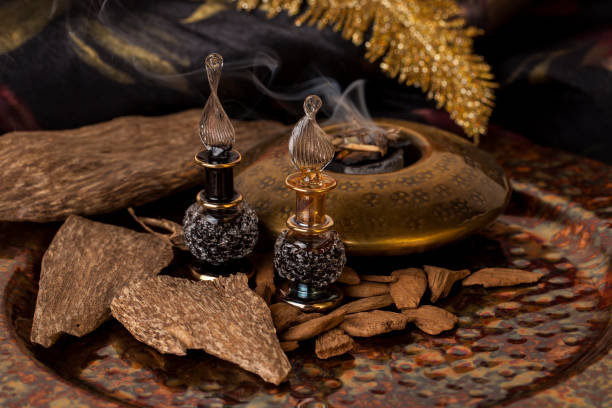
Agarwood, also known as oud, comes from the resin-bearing wood of Aquilaria trees. Its complex fragrance profile and traditional use in incense make it a distinctive option for reception areas, meditation spaces, and home-wellness collections.
This guide explains how agarwood differs from conventional fragrance products, how businesses can incorporate it into wellness spaces, and what buyers should evaluate when sourcing wholesale agarwood incense sticks.
1. Why Choose Agarwood Incense for Premium Wellness Spaces?
Fragrance affects how customers perceive a space. A sharp or overpowering scent may distract from a quiet treatment, while a subtle woody aroma can support a more intentional sensory environment.
Agarwood is valued for its layered, resinous, woody character, often accompanied by sweet, balsamic, or earthy notes. Its fragrance can suit businesses that want a more distinctive sensory identity than a generic room fragrance.
Agarwood Incense vs. Conventional Commercial Fragrances
| Evaluation factor | Conventional room fragrances and low-grade incense | Premium agarwood incense |
|---|---|---|
| Scent profile | Varies by formula; some products emphasize strong initial notes | Often deep, woody, resinous, and complex |
| Botanical origin | May use synthetic fragrance compounds, natural ingredients, or both | Derived from resin-bearing Aquilaria wood or agarwood-based ingredients, depending on the product |
| Fragrance consistency | Depends on formulation and manufacturing quality | Depends on wood origin, resin content, ingredients, and production method |
| Cultural heritage | Varies by product and fragrance tradition | Longstanding use in incense and traditional fragrance practices |
| Wellness positioning | Often marketed for room scenting | Can support meditation, relaxation rituals, and premium sensory experiences |
| Retail potential | Depends on brand differentiation and price positioning | May support premium gift sets and home-wellness collections |
Important: Natural origin alone does not guarantee low irritation, superior air quality, or better performance. Both natural and synthetic fragrance products require appropriate ingredient disclosure, quality control, and use instructions.
What Makes Agarwood Distinctive?
Three characteristics help explain its appeal to premium wellness businesses.
- Botanical heritage: Genuine agarwood forms in certain Aquilaria trees as resin accumulates in response to biological or physical stress.
- Complex aromatic composition: Agarwood contains diverse volatile and semivolatile compounds, including sesquiterpenes that contribute to its characteristic fragrance.
- Premium sensory positioning: Its layered aroma and established cultural associations can help a spa or studio develop a more recognizable fragrance identity.
For wholesale buyers, these characteristics should be supported by product documentation rather than relying on marketing language alone.
2. Understanding Agarwood’s Aromatic Compounds and Wellness Applications
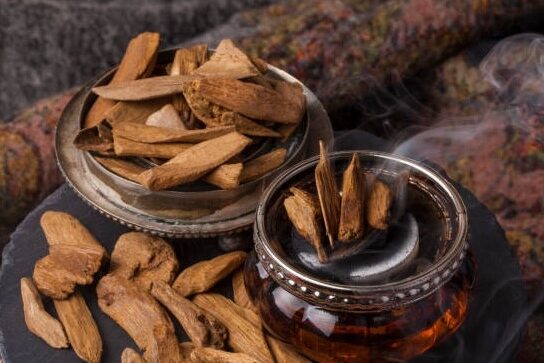
Agarwood’s fragrance comes from a complex mixture of aromatic compounds. Sesquiterpenes are among the chemical groups associated with agarwood’s scent profile. Compounds reported in agarwood research include agarospirol and jinkoh-eremol, although the composition varies with species, origin, resin formation, and processing.
Researchers have investigated agarwood constituents and aromatic inhalation for potential effects on mood, relaxation, and other physiological responses. However, findings from laboratory experiments or limited studies do not establish that every agarwood incense product delivers a specific clinical benefit.
For commercial wellness businesses, the most defensible approach is to describe agarwood through three evidence-based dimensions.
1. Botanical Origin and Traceability
Explain that agarwood is associated with resin-bearing Aquilaria wood. Ask suppliers to document the botanical source, origin, and processing method where available.
2. Aromatic Composition
Agarwood’s sesquiterpenes and other aromatic constituents contribute to its complex fragrance. However, a sesquiterpene-rich profile alone does not prove purity, safety, or a specific therapeutic effect.
3. Sensory Experience
Position agarwood as part of a carefully designed environment for quiet reflection, meditation, or relaxation. Avoid promising that incense treats anxiety, eliminates mental fatigue, or guarantees restorative sleep.
This approach gives front-of-house staff clear, credible information without relying on exaggerated wellness claims.
3. How to Integrate Agarwood Incense into Spa and Yoga Studio Operations
Agarwood products can support different stages of the customer journey, from arrival to post-session retail. The most appropriate product and delivery method depend on room size, ventilation, client sensitivity, and the facility’s fragrance policy.
Step 1: Create a Welcoming Reception Experience
A reception area is often the first opportunity to establish a brand’s sensory identity. A subtle woody fragrance can complement natural materials, soft lighting, and a calm interior design.
If the facility uses incense, test the fragrance intensity in the actual space before introducing it into regular operations. Consider nearby waiting areas, ventilation, and customers who may be sensitive to smoke.
Step 2: Design a Suitable Treatment-Room Fragrance Protocol
For massage rooms, facial treatment areas, and yoga studios, scent intensity should remain secondary to client comfort.
The original operating concept recommends burning agarwood incense for 10–15 minutes before a session and extinguishing it before treatment begins. This can be evaluated as a pre-scenting approach, provided the facility’s fire-safety rules, ventilation, and smoke sensitivity requirements permit it.
For spaces where smoke is undesirable, a suitable agarwood essential oil diffuser may be an alternative. Confirm the product’s identity and composition: essential oil, agarwood fragrance oil, and synthetic oud fragrance are not interchangeable terms.
Step 3: Extend the Experience Through Retail
Clients may want to recreate a memorable sensory experience at home. Wholesale agarwood incense sticks and compatible fragrance accessories can help spas and wellness retailers offer a home-care collection.
Potential retail formats include:
- Premium agarwood incense stick boxes.
- Branded incense gift sets.
- Meditation and relaxation kits.
- Agarwood fragrance products with clear ingredient and use information.
- Coordinated packaging for seasonal gifting or membership programs.
Retail performance depends on product quality, brand positioning, customer demand, and pricing. Premium positioning does not automatically guarantee a higher margin.
4. How to Source Agarwood Incense Stick Wholesale Products
For B2B buyers, selecting the right supplier involves more than comparing unit prices. Ingredient transparency, fragrance consistency, manufacturing quality, packaging, and legal sourcing all affect the long-term suitability of the product.
1. Verify Raw Material Origin
Ask suppliers to identify the botanical source and explain how the agarwood material is obtained and processed. Where relevant, request documentation supporting legal sourcing and applicable trade requirements.
Certain Aquilaria species and agarwood-related trade may be subject to CITES controls. Buyers should verify the applicable species, product form, origin, and current export or import requirements before placing international orders.
2. Review the Ingredient List
Determine whether the incense contains natural agarwood powder, other wood powders, binders, added fragrance compounds, dyes, or combustion aids.
A product described as “pure agarwood” should have a clear, verifiable ingredient specification. Do not assume that every agarwood-scented stick consists entirely of agarwood material.
3. Evaluate Fragrance Consistency
Request samples from the intended production grade and evaluate them under consistent conditions.
Review the initial scent, fragrance development during use, residual aroma, smoke characteristics, and batch-to-batch consistency. A strong initial smell alone does not establish high quality.
4. Check Manufacturing and Quality-Control Practices
Ask about raw material inspection, batch identification, production controls, storage conditions, and finished-product inspection.
Where available, request relevant test reports or quality documents. The required documentation depends on the product, destination market, and intended use.
5. Confirm OEM and Wholesale Capabilities
For spas, retail chains, and distributors, evaluate whether the supplier can support:
- Custom packaging and private-label branding.
- Multiple product grades or fragrance profiles.
- Wholesale order quantities and repeat production.
- Sample evaluation before bulk purchasing.
- Product specification sheets and traceability documents.
- Export packaging and destination-market documentation.
A structured supplier review can reduce the risk of inconsistent fragrance quality and unsupported product claims.
5. Operational FAQs for Spa and Yoga Studio Managers
How does agarwood incense differ from standard commercial room fragrances?
Agarwood typically has a complex woody and resinous scent profile, while conventional fragrances vary widely in their ingredients and composition. The actual difference depends on the specific products being compared, so buyers should evaluate samples and ingredient documentation.
How can staff explain the value of agarwood without making exaggerated claims?
Focus on three verifiable points: its botanical origin, its characteristic aromatic profile, and the product’s documented ingredients. Staff can describe its role in the facility’s fragrance ritual without promising medical or psychological outcomes.
How long should agarwood incense burn before a treatment?
The original operational recommendation is to pre-scent the room for approximately 10–15 minutes and extinguish the incense before the client enters for treatment. Treat this as a starting point, not a universal rule. Adjust according to room size, ventilation, fragrance intensity, and facility policy.
Where should an incense burner be placed?
Place the burner on a stable, heat-resistant surface away from combustible materials, client contact areas, and direct smoke exposure. Maintain appropriate clearance and follow the manufacturer’s instructions and local fire-safety requirements.
The original suggestion of positioning a burner 1–1.5 meters above the floor near an airflow entry point should not be applied universally. Airflow patterns differ by room, and placement should prioritize safe operation and comfortable scent distribution.
Is agarwood essential oil the same as agarwood incense?
No. Incense releases fragrance through combustion, while an essential oil diffuser disperses aromatic material without burning incense. Products marketed as agarwood oils may also differ in composition, so buyers should verify whether the material is a genuine essential oil, an extract, or a formulated fragrance oil.
Can agarwood incense reduce anxiety or improve sleep?
Some research has examined agarwood constituents and aromatic exposure for potential relaxation-related effects. However, the evidence does not justify promising that all agarwood incense products treat anxiety, improve sleep, or provide consistent clinical benefits. Present the product primarily as a fragrance and sensory-experience offering.
6. Key Takeaways for Wholesale Agarwood Buyers
When developing a premium wellness fragrance program, prioritize the following:
- Authenticity: Verify the botanical source and ingredient composition instead of relying on the product name alone.
- Fragrance consistency: Evaluate samples and establish repeatable acceptance criteria before bulk purchasing.
- Responsible wellness messaging: Explain aromatic characteristics and traditional use without making unsupported medical claims.
- Operational suitability: Consider smoke, ventilation, fire safety, and client sensitivities before introducing burning incense.
- Commercial readiness: Review OEM packaging, traceability, wholesale quantities, and export documentation.
- Retail integration: Use coordinated incense and fragrance products to create a consistent brand experience across on-site services and home-wellness offerings.
Conclusion: Build a Distinctive Wellness Fragrance Experience with Wholesale Agarwood Incense
Agarwood incense can help spas, boutique yoga studios, and wellness retailers create a distinctive fragrance identity rooted in botanical origin and cultural heritage. Its complex woody aroma offers an alternative to generic room scenting, while coordinated retail products can extend the sensory experience beyond the facility.
Successful sourcing requires more than choosing the strongest fragrance or the lowest wholesale price. Buyers should verify raw material origin, ingredient transparency, product consistency, legal sourcing, and packaging capabilities before committing to bulk orders.
For businesses developing a premium wellness fragrance collection, work with an agarwood supplier that can provide clear product specifications, traceability documentation, sample evaluation, and OEM packaging support. This creates a more credible foundation for a differentiated and commercially sustainable fragrance offering.