


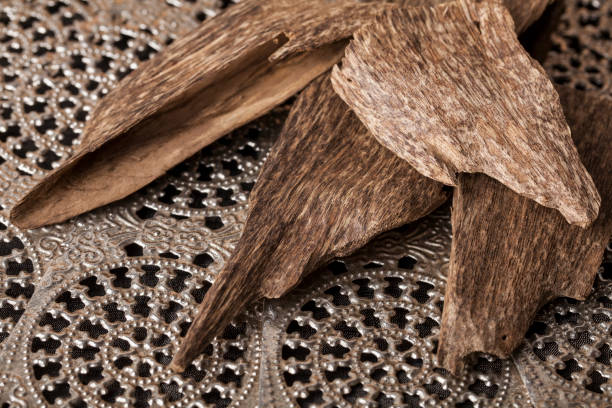
For buyers planning sustainable bakhoor oud wholesale, the key question is no longer just how to find premium aromatic materials. It is how to secure consistent quality, traceable origins, and reliable supply over time. As fragrance businesses expand their product ranges, cultivated agarwood is becoming an increasingly important part of the commercial sourcing conversation.
Agarwood, commonly associated with oud, is valued for its rich aromatic profile and use in incense, traditional fragrance products, and perfumery. However, not all agarwood comes from the same source, and not every product described as sustainable offers the same level of traceability.
For wholesalers, importers, bakhoor brands, and fragrance distributors, this creates an opportunity to review purchasing strategies before supply requirements grow. Understanding market forecasts, plantation cultivation, product quality, and international trade requirements can help buyers make better long-term sourcing decisions.
1. Agarwood Market Trends: What the Numbers Tell Wholesale Buyers
Market research suggests that the agarwood industry may continue to expand, supported by demand for premium fragrance materials and investment in cultivation. However, forecasts vary according to the products and market segments included in each report.
One estimate from Persistence Market Research values the global agarwood essential oil market at approximately US$191 million in 2025 and projects it to reach US$293 million by 2032, representing a compound annual growth rate of about 6.4%. These figures are estimates from a specific market research model, not guaranteed market outcomes.
Source: Persistence Market Research — Agarwood Essential Oil Market Forecast.
Why Market Growth Matters for Wholesalers
A growing market can create opportunities for businesses supplying agarwood chips, oud oil, bakhoor ingredients, and finished incense products. Yet market expansion does not automatically mean every product category will grow at the same rate.
Agarwood essential oil, raw wood chips, finished bakhoor, and blended incense products serve different purposes and have different pricing structures. Buyers should therefore distinguish between the essential oil market and the broader agarwood or incense market when evaluating demand.
For wholesale purchasing, three questions matter more than a headline growth percentage:
- Can the supplier maintain the required product grade and quantity?
- Can the supplier document the material’s origin and applicable trade status?
- Can the supplier deliver consistent batches at a commercially viable cost?
These questions connect market trends directly to procurement decisions.
Why Cultivated Agarwood Is Becoming More Important
Wild agarwood production faces biological and conservation constraints. Resin formation is not uniform across trees, and producing valuable aromatic wood takes time.
The Convention on International Trade in Endangered Species of Wild Fauna and Flora (CITES) identifies agarwood-producing species and documents the international trade in materials from both wild and artificially propagated sources. Its technical guidance also describes the increasing importance of plantation-grown Aquilaria crassna in global agarwood supply.
Source: CITES — A Guide to CITES-Listed Tree Species.
This shift makes plantation-based sourcing an important option for buyers seeking more structured procurement. However, cultivated agarwood is not automatically identical to wild material in fragrance, resin content, grade, or market value. Product specifications and sample evaluation remain essential.
2. Why Cultivated Agarwood Creates a Strategic Sourcing Opportunity
For wholesale buyers, the potential advantage of cultivated agarwood lies in supply-chain planning rather than simply replacing one source with another.
Plantations can provide a managed production base. Depending on the country, cultivation method, harvesting practices, and processing arrangements, they may help suppliers plan production and maintain records more systematically.
More Structured Supply Planning
A supplier with access to cultivated resources may be better positioned to explain its production capacity, expected harvest schedules, and available product grades.
This can support more practical purchasing arrangements, especially for businesses that need repeat orders rather than occasional purchases of rare materials.
However, plantation ownership alone does not guarantee stable supply. Buyers should still ask about tree maturity, resin formation, processing capacity, existing commitments, and the quantity available for export.
For long-term contracts, clarify whether the supplier controls the plantation directly, purchases from independent growers, or relies on intermediaries.
Better Opportunities for Traceability
A traceable supply chain helps buyers understand where materials originate and how they move through harvesting, processing, storage, and export.
For businesses selling premium bakhoor or oud products, documented sourcing can also support more credible product descriptions. It helps purchasing teams distinguish verified facts from broad marketing claims.
Useful records may include:
- Country and region of origin.
- Species identification where relevant.
- Cultivation or harvest documentation.
- Processing and batch records.
- Applicable permits and export documentation.
- Product grade and quality specifications.
The documents required depend on the species, product form, country of origin, destination market, and applicable regulations. Buyers should confirm the requirements for each shipment instead of assuming one certificate covers every product.
Why Buyers Should Avoid Unsupported Supply Forecasts
Some market discussions suggest that cultivated sources will account for an increasingly large share of agarwood supply. The direction is consistent with the documented development of plantation production, but a precise forecast such as more than 80% of global supply by 2030 should not be treated as established fact without a clear, reliable source and definition of supply.
For procurement teams, the more useful question is whether a specific supplier can demonstrate a dependable, compliant, and suitable source for the products being purchased.
A sustainable sourcing strategy should be based on verifiable supplier information rather than a single global percentage.
3. Sustainable Bakhoor Oud Wholesale: What Should Buyers Source?
Agarwood-related products serve different purposes. Buyers should identify the intended end product before comparing suppliers, because wood chips, essential oil, and finished bakhoor are not interchangeable.
Agarwood Chips for Bakhoor and Incense
Agarwood chips are used in traditional incense applications and may also serve specialist fragrance markets. Their commercial value depends on factors such as aromatic profile, resin distribution, grade, size, moisture, and intended use.
For wholesale orders, request representative samples and a written grading description. Confirm whether the quotation covers raw chips, processed chips, or another product form.
Buyers should also clarify how the supplier describes cultivated material. A plantation-grown product should not be represented as wild-harvested material.
Oud Oil for Fragrance Applications
Oud oil is a concentrated aromatic product obtained from agarwood through extraction or distillation processes. Its aroma and commercial value can vary considerably according to raw material, processing method, and product composition.
For bulk oud oil procurement, ask for the following where applicable:
- Botanical source and origin information.
- Extraction or processing method.
- Batch identification and sample availability.
- Composition or analytical documentation appropriate to the product.
- Storage and handling recommendations.
- Applicable regulatory and shipping documents.
If buyers require natural agarwood oil rather than a fragrance blend or synthetic oud accord, the specification should state this clearly. Product names alone do not establish composition or authenticity.
Finished Bakhoor and Refined Oud Products
Bakhoor is a category of aromatic incense products that may contain wood chips, fragrance oils, resins, and other ingredients. Formulations differ between manufacturers and markets.
A buyer searching for refined bakhoor oud bulk sale should clarify whether the requirement is for finished bakhoor, agarwood chips intended for blending, or a particular oud-based fragrance ingredient.
This distinction affects pricing, packaging, product documentation, and quality control. It also prevents misunderstandings when comparing quotations from suppliers offering different product types.
4. How to Evaluate a Sustainable Agarwood Supplier
A supplier’s sustainability claims should be supported by evidence. For wholesalers, the goal is to evaluate the actual supply chain rather than rely on terms such as natural, premium, plantation-grown, or eco-friendly.
Check the Source and Cultivation Background
Start by asking where the agarwood originates and whether the supplier can identify the relevant production source.
For plantation-grown material, ask whether the supplier can provide information about the plantation, cultivation arrangements, harvest records, and chain of custody. If a supplier uses third-party growers, clarify how it verifies the origin of purchased material.
A plantation-based supply model can support more structured sourcing, but the buyer still needs to verify the specific product and documentation.
Confirm Trade Compliance Before Ordering
International agarwood trade may be subject to CITES controls and national rules. Applicable requirements can differ according to the species, product form, source, and destination.
Before placing a bulk order, buyers should confirm:
- Whether the species or product is covered by applicable trade controls.
- Which permits, certificates, or supporting records are required.
- Whether the supplier and exporter can provide the necessary documentation.
- Whether import requirements in the destination market have been checked.
- Whether the product description and declared origin match the shipment documents.
Official guidance is available through CITES. Importers should also consult the relevant national authorities or a qualified customs specialist.
Do not assume that cultivated origin automatically removes every permit or documentation requirement.
Compare Samples Before Committing to Bulk Orders
Even when suppliers offer similar product names, their materials may differ in aroma, grade, appearance, and processing.
For agarwood chips, evaluate the sample against the intended application and agreed grading criteria. For oud oil, compare the aromatic profile and review appropriate product documentation.
Where repeat purchasing matters, retain approved reference samples and agree on measurable acceptance criteria. These may include product form, grade, batch identification, packaging, and any agreed analytical specifications.
This creates a clearer basis for assessing subsequent shipments.
Assess Capacity and Batch Consistency
A supplier may provide an excellent sample but struggle to reproduce the same quality or quantity at scale.
Before committing to a long-term purchasing arrangement, discuss:
- Available inventory and realistic production capacity.
- Minimum order quantities and order lead times.
- Seasonal availability and allocation policies.
- Batch-to-batch quality controls.
- Packaging, storage, and shipping arrangements.
- Procedures for handling nonconforming shipments.
Where appropriate, begin with a trial order before moving to a larger supply agreement. A gradual purchasing process allows buyers to assess product quality and delivery performance under real trading conditions.
5. A Practical Long-Term Procurement Strategy for Bakhoor and Oud Wholesalers
The potential growth of cultivated agarwood creates a reason to review sourcing arrangements, but buyers should avoid treating it as a guaranteed price or supply opportunity.
A more resilient strategy combines product diversification, supplier verification, and realistic inventory planning.
Build a Supplier Portfolio Around Product Requirements
Different customer segments may require different agarwood grades, oil profiles, or bakhoor formulations. Rather than sourcing every product from a single undifferentiated category, wholesalers can organize purchasing around specific customer needs.
For example, a distributor may purchase agarwood chips for traditional incense retailers, oud oil for fragrance manufacturers, and finished bakhoor for established retail channels.
Each category should have its own specifications and acceptance criteria. This makes quotations easier to compare and reduces the risk of treating different materials as equivalent.
Use Forecasts to Guide Planning, Not to Guarantee Returns
Market forecasts can help businesses identify areas worth investigating. They cannot guarantee that demand, pricing, or supply conditions will develop as predicted.
For long-term purchasing, combine market research with actual sales history, customer feedback, stock turnover, supplier lead times, and cash-flow requirements.
A buyer may choose to secure supply earlier when a product has a long production lead time or requires a specific grade. However, the purchase quantity should still reflect expected demand, storage conditions, and financial exposure.
Develop Clear Supplier Agreements
For recurring bulk orders, a written agreement can define product specifications, order quantities, delivery schedules, documentation responsibilities, and quality-dispute procedures.
It can also clarify how the parties will handle changes in availability, regulatory requirements, or product grades.
Where long-term supply is important, discuss realistic capacity commitments and review performance periodically. Avoid relying on verbal assurances about unlimited availability or guaranteed future prices.
6. Frequently Asked Questions
Q1: Why Is Cultivated Agarwood Important for Sustainable Bakhoor Oud Wholesale?
Cultivated agarwood provides an alternative supply source to wild-harvested material and can support more structured production planning. It may also help buyers establish clearer sourcing records.
However, sustainability depends on actual cultivation and harvesting practices, traceability, and legal compliance. Buyers should verify each supplier’s claims rather than assume all plantation-grown products meet the same standard.
Q2: Is Plantation-Grown Agarwood the Same Quality as Wild Agarwood?
Not necessarily. Aroma, resin distribution, grade, and commercial value can vary with species, growing conditions, resin formation, cultivation methods, and processing.
Some cultivated products may suit particular incense or fragrance applications very well, while others may not match the characteristics required by premium buyers. Sampling and agreed specifications are therefore essential.
Q3: Does Cultivated Agarwood Automatically Qualify as Sustainable or CITES-Compliant?
No. Cultivation is only one part of the sourcing assessment. Buyers should verify origin, relevant documentation, applicable trade controls, and national regulations.
CITES requirements depend on the material and transaction involved. Importers should confirm current requirements with the appropriate authorities before shipment.
Q4: What Should Buyers Check Before Ordering Refined Bakhoor Oud in Bulk?
First, clarify whether the order covers finished bakhoor, agarwood chips, natural oud oil, or a formulated fragrance product.
Then confirm the composition or product description, grade, aroma profile, packaging, sample approval, quantity, delivery terms, and required documents. Written specifications help buyers compare suppliers on a consistent basis.
Q5: Is Now the Right Time to Sign a Long-Term Agarwood Supply Contract?
It may be a suitable time to review supplier relationships and sourcing options, particularly if your business depends on repeat orders or specific product grades.
However, a contract should reflect verified supply capacity, expected demand, product quality, pricing terms, and compliance requirements. Market forecasts alone are not sufficient grounds for a large purchasing commitment.
Conclusion: Build Long-Term Value Through Verified Sourcing
The commercial opportunity in agarwood is not simply about predicting market growth. It is about finding the right balance between product quality, supply reliability, traceability, and regulatory compliance.
For sustainable bakhoor oud wholesale, cultivated agarwood deserves attention because plantation production has become an important part of the supply landscape. Nevertheless, buyers should assess each source individually and avoid relying on unsupported global supply forecasts or broad sustainability claims.
A practical sourcing strategy starts with clearly defined product requirements, supplier verification, sample testing, and realistic purchasing plans. It then builds toward repeatable quality checks and documented supply arrangements.
For Crescent Oud’s wholesale customers, the next step is to identify the required product form—agarwood chips, oud oil, or finished bakhoor—and establish the specifications and documentation needed for the target market. This creates a stronger foundation for long-term purchasing than chasing short-term market predictions alone.